Current Location: Blog >
South Korean cloud server
1.
overview: why you should pay attention to off-site backup and security when deploying cloud servers in south korea
- south korea (seoul, busan) is an important node in the asia-pacific, and access speed and compliance are its advantages.- e-commerce, saas and media services often require low latency and high availability.
- single points of failure, hardware failures and regional network outages will cause business unavailability.
- off-site backup (same city/different city/cross-country) can ensure that rpo and rto goals are achieved.
- at the same time, it is necessary to cooperate with cdn and ddos protection to reduce bandwidth peaks and attack risks.
2.
pre-purchase preparation: key points in selecting computer room and basic configuration
- region selection: seoul (seo) is suitable for traffic from mainland china and japan and south korea, and busan is suitable for submarine optical cable node redundancy.- bandwidth specifications: it is recommended that the minimum public network bandwidth starts at 10mbps, and 100mbps or 1gbps is optional for production.
- public ip and elastic ip: confirm whether fixed elastic ip and bgp export are supported.
-storage type: select ssd (nvme) for database, sata can be used for cold backup.
- sla and after-sales: confirm 99.95% sla, technical support work order response time and cross-region rapid migration capabilities.
3.
offsite backup strategy and rpo/rto settings
- define rpo (acceptable data loss time) and rto (recovery time), typical rpo=1 hour/rto=30 minutes.- backup types: mirror snapshot, file-level incremental, object storage backup (cold backup).
- backup location: hot backup in the same city, real-time synchronization in remote locations (seoul↔busan), cross-border cold backup (south korea↔japan/singapore).
- frequency and window: database increment every 5~15 minutes, daily snapshot of files, comprehensive volume.
- bandwidth and cost evaluation: for example, 1tb daily increment needs to consider synchronization bandwidth and storage costs.
4.
backup implementation technology stack and sample commands
- commonly used tools: rsync+ssh, borg/restic (encryption and deduplication), lvm/btrfs snapshot.- object storage: use naver cloud/aws s3/wasabi for cold backup and support life cycle policies.
- example: daily increment using rsync + cron: 0 */1 * * * rsync -az --delete -e "ssh -i /root/id_rsa" /var/www/ backup@backup.example:/data/.
- snapshot and rollback: lvm snapshot or btrfs send/receive is used for minute-level rpo.
- encryption and transmission: enable aes-256 encryption for backup data during transmission and storage, and enable transmission compression and verification.
5.
security configuration key points: host, network and access control
- ssh security: disable password login, only allow key login, turn off root direct connection, use non-standard ports instead and enable fail2ban.- firewall: use nftables/iptables or cloud security group to open only necessary ports (80/443/ssh management port).
- intrusion prevention: deploy waf (web application firewall) to intercept sql injection and xss, combined with log monitoring.
- vulnerability management: automatic patch strategy and image replacement cycle, daily inspection of operating system and key middleware.
- minimum permissions: separate account permissions for database and application. domain name resolution can only be modified by authorized personnel.
6.
cdn and ddos defense practical points
- cdn role: cache static resources, reduce origin site bandwidth energy consumption and reduce latency (time to first byte reduced by 30~70%).- recommended: use cloudflare/akamai/local cdn acceleration, and enable site-wide https and caching rules.
- ddos protection: combining cloud vendor protection and third-party cleaning, common cleaning bandwidth is 1gbps~10gbps; large traffic attacks can reach hundreds of gbps and require dedicated cleaning.
- traffic policy: set rate limits, geo-blocking and acls, enable verification codes and tokens on key interfaces.
- drills and monitoring: conduct regular fault drills and set alarm thresholds (for example, traffic >200mbps or concurrent connections >50k triggers an alarm).
7.
real cases and server configuration examples (including tables)
- case: a korean e-commerce company has a dual-active architecture. the main node in seoul handles user requests, and the backup node in busan performs remote synchronization.- attack record: once encountered a 500mbps udp amplification attack, after enabling cloud vendor cleaning, it returned to normal within 10 minutes.
- taking the mid-year deployment as an example, the configuration is as shown in the following table and core commands and protection examples are given.
- core command example: iptables -a input -p tcp --dport 22 -m conntrack --ctstate new -j accept; brute force cracking is prohibited after fail2ban is enabled.
- recovery process: execute rsync from the backup server or pull a snapshot from the object storage and rebuild the service. the estimated rto is about 20 to 45 minutes.
| node | cpu | memory | disk | public network bandwidth | backup strategy |
|---|---|---|---|---|---|
| master node (seoul) | 8 vcpus | 32gb | 500gb nvme (raid1) | 1 gbps | live asynchronous rsync + daily snapshots |
| backup node (busan) | 4 vcpus | 16 gb | 2 tb sata (object cold standby) | 200mbps | hourly increment, comprehensive volume, s3 remote cold backup |
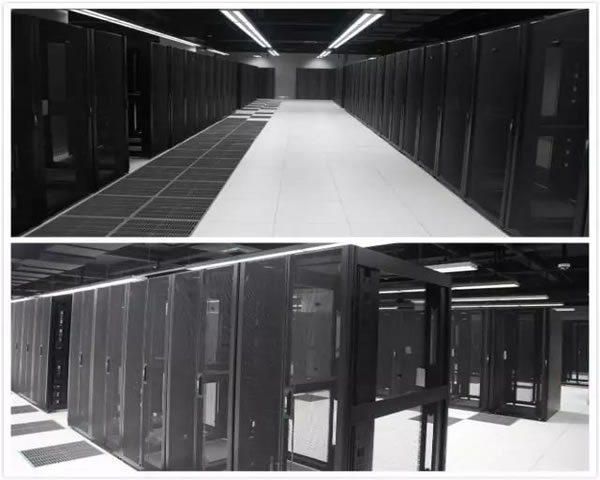
- Latest articles
- Innovative Model Taiwanese Server Odm Manufacturer Cloud Space’s Successful Practice In Customized Hardware
- How To Judge The Difference Between Xiaomi 4 Japan Serverless Version When Buying A Second-hand Mobile Phone
- Vietnam Server Reliable Website Cross-border Network Quality Test And Node Distribution Reference
- How To Reduce Business Interruption And Recovery Time After A Server Fire In Singapore Through Drills
- Which Is The Best Cloud Server In Vietnam? Region Selection Strategy And Node Fault Tolerance Practical Sharing
- Cost Control: Optimization Method For Data Transmission Costs From Vietnam Cloud Server To Mainland China
- Three Networks Cn2 Malaysia’s Future Trend Prediction And Analysis Of The Impact On Enterprise Network Architecture
- After Comparing Domestic And Foreign Routes, Why Do We Recommend Vietnam Cn2 Vps For International Export?
- How To Use Vietnam Native Ip Vps To Build A Stable Testing Environment And Automated Crawling Platform
- Recommended Platform Korean Native Ip Query Url Collection Of Several Trustworthy Online Tools
- Popular tags
Performance Improvement
Packet Loss
Google Cloud Server
Recommendation
Network Speed
Legal Risks
Tencent Cloud
Usage Experience
Type
Compliance Services
Stability
Malaysia Big Server
Data Card
Registration Steps
Three Networks
Bandwidth Evaluation
Network Service Performance Comparison
Actual Test
Bandwidth
Snapshot
Malaysia Host Comparison
Server
Importance
High-speed Network
Backup And Recovery
Contract Points
Safety
Cloud Server Advantages
Applicable Users
Server Notes
Related Articles
-
A Complete List Of Korean Cloud Server Addresses And How To Obtain Them
this article provides you with a complete list of korean cloud server addresses and how to obtain them to help you choose the appropriate service. -
An Effective Way To Solve The Problem Of Korean Vps Hangup
this article introduces effective methods to solve the problem of korean vps hangup, including cause analysis and solutions. -

Focus On The Stability And After-sales Service Of Korean Computer Room Vps Through Real User Feedback
based on real user feedback, we will teach you step by step how to evaluate and verify the stability and after-sales service of korean computer room vps, including detailed executable steps for collecting feedback, automated testing, monitoring and alarming, after-sales experience evaluation and decision-making suggestions.